
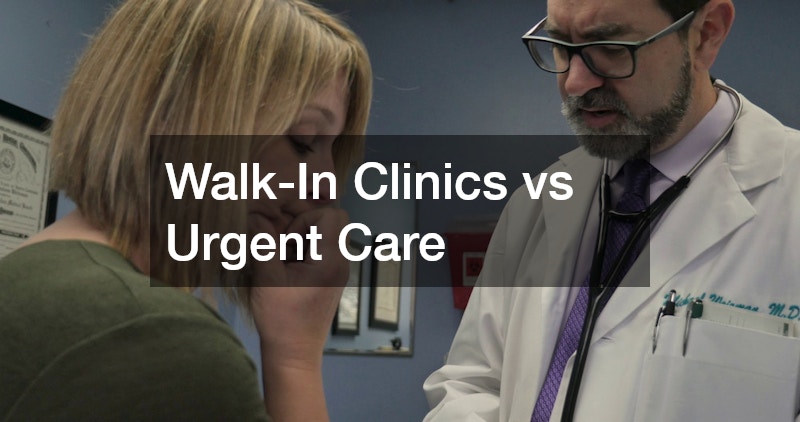
In recent years, walk-in clinics and urgent care facilities have become vital components of the healthcare landscape. Both options provide accessible and efficient healthcare services, yet they cater to different needs and situations. Navigating the differences and determining which is right for you requires a deeper understanding of what each facility offers.
Walk-in clinics typically serve as a convenient option for individuals with minor health concerns. These clinics often provide services such as flu shots, minor injury treatment, and routine check-ups. Their aim is to offer patients a chance to address their health concerns promptly without the need for an appointment or the long waiting times often associated with primary care physicians.
Urgent care centers, on the other hand, are designed to manage more serious, but not life-threatening, medical issues. These facilities are equipped with more advanced medical technologies and staffed by healthcare professionals capable of handling conditions that require immediate attention. They often bridge the gap between emergency room services and standard doctor’s office visits, providing an efficient solution for critical health issues that do not warrant an emergency room visit.
The Role of Walk-In Clinics
Walk-in clinics have revolutionized access to healthcare by making it more convenient and readily available. Generally situated in convenient locations like shopping malls or drugstores, these clinics are a go-to for patients who need care outside of traditional hours. Their primary function is to reduce the burden on emergency rooms by treating less serious ailments.
These facilities contribute significantly to preventive healthcare, offering services like vaccinations and screenings. They enable individuals to maintain their health proactively rather than reactively, encouraging a healthier population overall. Walk-in clinics are not typically equipped to handle complex health problems, yet they provide an invaluable service for routine and preventative care.
Furthermore, the cost-effectiveness of walk-in clinics cannot be overlooked. By providing affordable healthcare, they allow individuals who might otherwise skip medical care due to cost concerns a chance to get necessary treatment. Accessibility and affordability are the hallmarks of these essential healthcare facilities that serve as a critical component of modern health services.
The Importance of Urgent Care Centers
Urgent care centers play an indispensable role in the healthcare system by offering immediate services for intermediate medical needs. These centers provide an alternative to the emergency room for non-life-threatening conditions that still require prompt attention, such as severe cuts, fractures, or moderate asthma attacks. The presence of diagnostic tools like X-rays and laboratory testing facilities makes urgent care centers uniquely equipped for times when immediate answers are necessary.
Another vital feature of urgent care facilities is their extended hours of operation. They are often open late into the evenings and on weekends, which provides convenience for those who cannot miss work or school. This adaptability aligns with a fast-paced world, meeting the diverse schedule needs of a busy population seeking essential medical care.
Cost is another important consideration when understanding the value of urgent care. Compared to emergency room visits, which can be prohibitively expensive, urgent care offers a cost-effective solution, covered by most insurance plans, for acute but not dire medical issues. This combination of affordability and accessibility makes urgent care a preferred choice for many seeking immediate health services.
When to Choose Walk-In Clinics Over Urgent Care
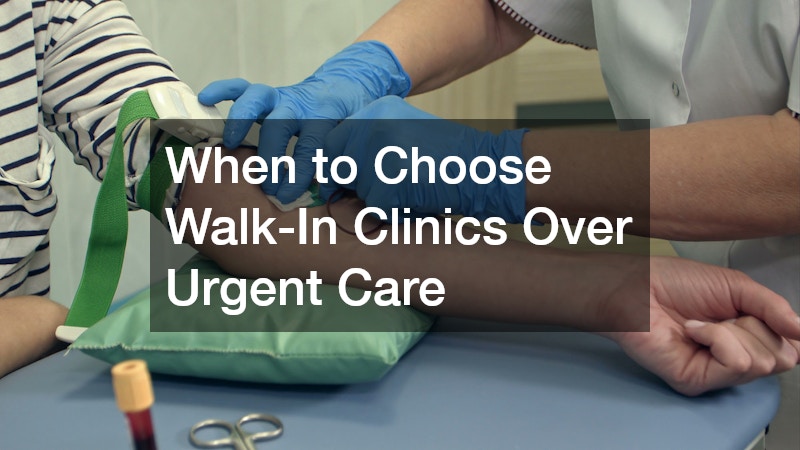
Deciding between a walk-in clinic and an urgent care facility can be challenging but depends largely on the severity of the medical issue. For minor ailments such as sore throats, rashes, or minor cuts, a walk-in clinic is usually sufficient. These clinics offer quick and effective treatment, perfect for situations that are not critical
However, if the situation involves a deeper concern that may require specialized diagnostic equipment, urgent care centers are better suited. Examples include the need for stitches, x-rays, or intravenous fluids, where the risk is slightly higher but not immediately life-threatening. In such instances, patients will benefit from the urgent care’s expanded range of services and medical expertise.
Walk-in clinics are also preferable when you are looking to avoid higher costs associated with urgent care. They offer basic healthcare services at a reduced price, beneficial for those without serious medical conditions requiring emergent intervention. Deciding between these two options depends on evaluating the medical issue’s urgency, cost implications, and the required medical expertise or equipment.
